
Frequently Asked Questions
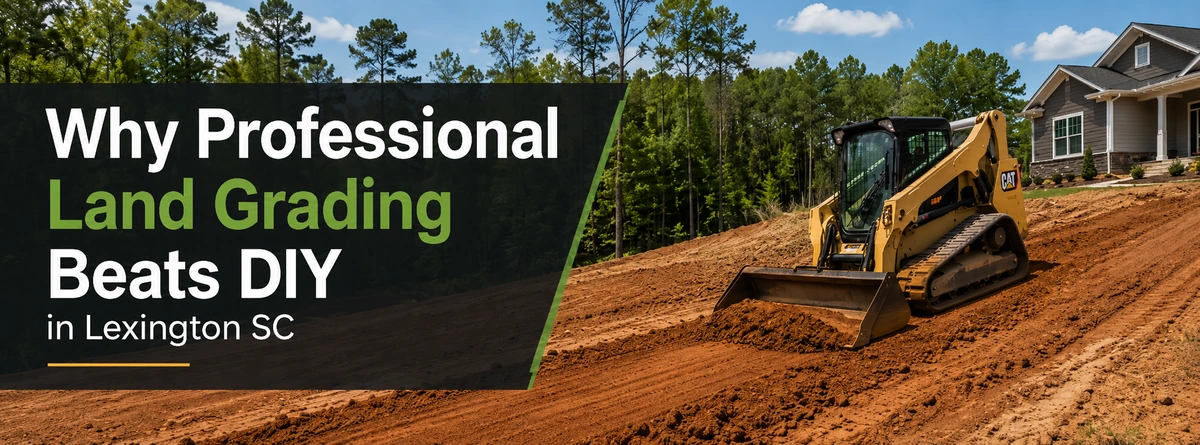
Why Professional Land Grading Beats DIY in Lexington SC
Quick Answer: Professional land grading uses the right equipment, site measurements, soil handling, and drainage planning to create a stable slope that works with the property. DIY grading may look less expensive at first, but mistakes can redirect runoff toward a house, create erosion, leave low spots, or demand the work to be done again.
Grading Must Control Water, Not Just Flatten Soil
A yard can appear smooth and still drain poorly. Even a small low area may hold water after heavy rain, while an incorrect slope can send runoff toward a foundation, driveway, neighboring property, or planting bed. A professional evaluates where water begins, how it travels across the lot, and where it can safely discharge before changing the grade.
South Carolina Clay Soil Is Difficult to Judge
Clay soil can become sticky and difficult to shape when wet, then harden after it dries. Moving it at the wrong moisture level may create deep ruts, clumps, or compaction problems. A grading contractor can select equipment that fits the site and work the soil without unnecessarily disturbing more of the property than the project requires.
DIY Equipment Has Practical Limits
Rental equipment can move soil, but operating it accurately on a slope takes experience. Homeowners also need to consider safe access, buried utilities, property boundaries, existing drainage outlets, septic areas, tree roots, and nearby structures. Too much soil removed from one area or placed in another can create a new problem that is not obvious until the next major storm.
Professional Grading Connects to the Next Project
The correct finished grade depends on what comes next. A lawn, driveway, patio, drainage system, building pad, fence line, or cleared lot may each require a different approach. Grading should also account for soil settlement and base preparation rather than leaving a surface that only looks finished on the day the equipment leaves.
Why This Matters
Good grading helps make land more usable while reducing conditions that contribute to standing water, washouts, soil movement, and repeated landscape repairs. If runoff is already causing trouble, grading may need to be coordinated with yard drainage solutions instead of being treated as a separate issue.
Local Relevance
Properties around Lexington, Columbia, Irmo, Lake Murray, West Columbia, and nearby rural communities regularly combine clay soil, wooded slopes, older drainage patterns, and intense rainfall. The right solution depends on the individual property. A contractor should inspect how long water remains after rain, where erosion begins, and whether the grading work affects adjacent areas.
When to Contact a Professional
Professional help is especially important when water moves toward a structure, a driveway repeatedly washes out, the area includes a steep slope, significant soil must be moved, or the project connects to clearing, drainage, or construction. Reviewing recent land service projects can also help property owners understand what properly planned grading looks like.
Final Thoughts
DIY grading may work for a very small, simple touch-up, but larger drainage and slope changes can affect the whole property. AKA Land Services can evaluate the site, discuss the intended use, and recommend an approach based on access, soil, runoff, and existing conditions. Property owners can request a quote to begin planning a grading project in Lexington or the surrounding area.