Frequently Asked Questions
What to Know Before Clearing Overgrown Land
Quick Answer: Clearing overgrown land is about more than cutting brush. A good plan should consider access, vegetation type, slope, drainage, soil conditions, future use, and what should stay protected on the property.
Start With the Purpose of the Space
Before equipment arrives, decide what the cleared area needs to do. Some property owners want a cleaner backyard. Others need access to a fence line, a future pasture, a driveway path, a building area, or a better view of the land. The clearing method can change depending on whether the goal is rough cleanup, selective clearing, forestry mulching, grading, or preparing the site for another project.
Look at Access, Slope, and Ground Conditions
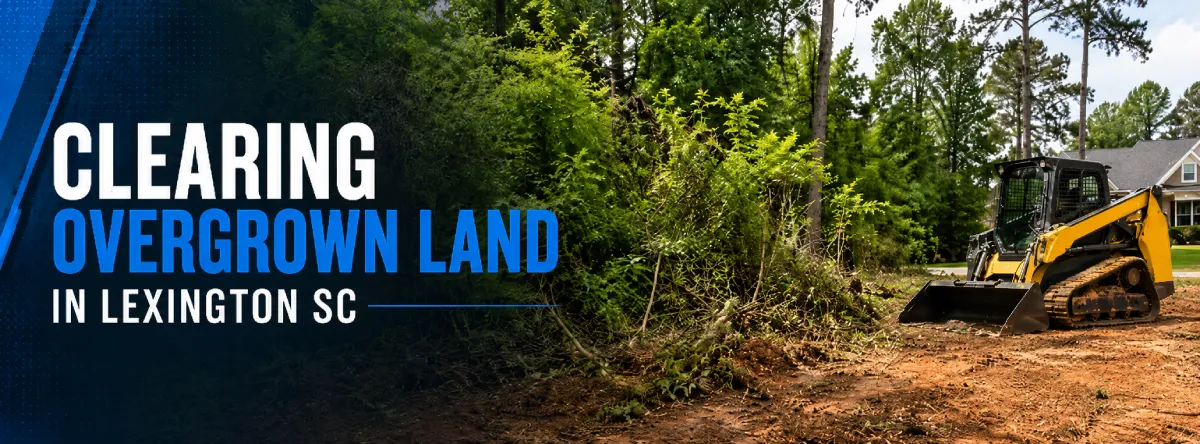
Access matters. A narrow gate, soft ground, steep slope, ditch, or tight tree line can affect what equipment is practical and how the work should be staged. In Lexington and Columbia, red clay soil can become slick or rutted when wet, so timing and ground conditions can make a difference. If the land is low, uneven, or holding water, the clearing plan should consider drainage before the area is opened up.
Decide What Should Stay and What Should Go
Not every tree, shrub, or natural feature needs to be removed. Selective clearing can open up a property while keeping shade, privacy, mature trees, or a natural buffer. A thoughtful plan can also help protect areas near driveways, property lines, pond banks, and neighboring yards. Clearing too aggressively can create erosion, expose roots, or leave the land looking unfinished.
Why This Matters
Overgrown land often looks like a brush problem, but the bigger issue is usability. Once the brush is gone, the property may still need cleanup, smoothing, drainage correction, or grading after land clearing to make the space easier to maintain. A good clearing job should help the property owner see the land clearly and make better decisions about what comes next.
Local Relevance
Properties around Lexington, Columbia, Irmo, Lake Murray, West Columbia, Batesburg, Leesville, and Pelion can vary a lot. Some lots are wooded and tight. Others are rural, sloped, wet after storms, or covered in fast-growing undergrowth. South Carolina heat, heavy rain, clay soil, and long growing seasons can turn a manageable area into a rough section of land faster than many property owners expect.
When to Contact a Professional
It is worth contacting a professional when the brush is too thick to walk through, when equipment access is limited, when the area has slope or drainage concerns, or when the clearing is part of a larger project. A professional can help decide whether the job calls for brush clearing, selective clearing, forestry mulching, grading, or a phased approach.
Final Thoughts
Clearing overgrown land can make a property safer, cleaner, easier to maintain, and more useful. The best results come from planning around the land itself instead of simply removing everything in sight. If you want to reclaim an overgrown area on your property, request a quote from AKA Land Services and share what you want the space to become.