
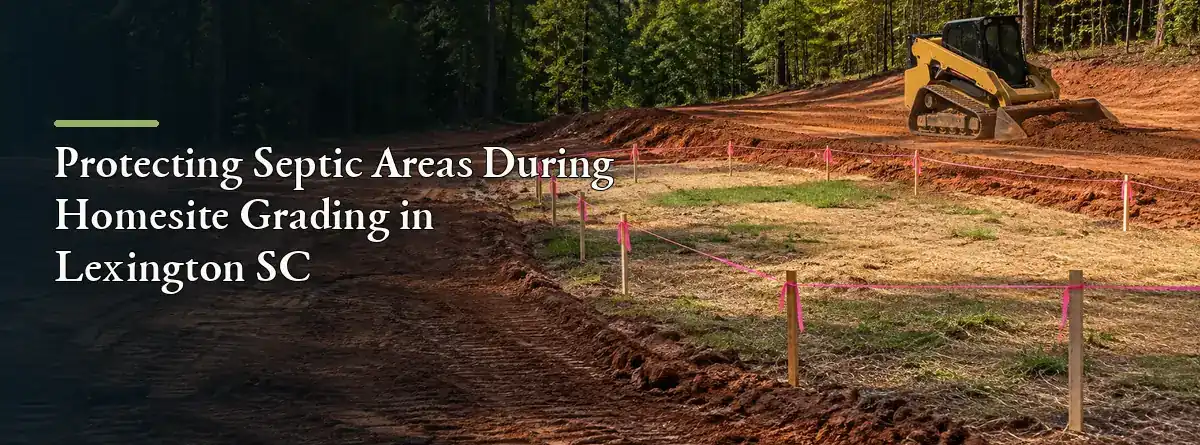
Treat the Septic Area as a Protected Work Zone
On a homesite that will use a septic system, some ground needs to be treated differently from the rest of the construction area. Once the proposed drainfield and repair area have been identified, those locations should not become convenient travel lanes, material storage areas, turning zones, or places to push excess soil while the rest of the property is being graded.
This is a narrower jobsite issue than general septic or drainage preparation. The objective is to complete necessary land grading in Lexington SC while keeping unnecessary soil disturbance and equipment traffic out of the areas reserved for the septic system.
Before the First Machine Enters the Lot
The boundaries that matter should be established before loaders, excavators, dump trucks, or other equipment begin moving around the homesite. South Carolina Department of Environmental Services site evaluations consider soil conditions, landscape position, setbacks, and space for a repair area. The state's onsite wastewater application also asks property owners to identify septic areas, driveways, utilities, drainage features, vehicular areas, and locations where grading or other soil disturbance is planned.
That makes jobsite layout important before grading starts. A simple set of stakes or highly visible marking can give operators a clear area to work around instead of relying on someone to remember where a proposed drainfield was located.
- Clearly mark the proposed drainfield.
- Mark the designated repair or replacement area as well.
- Establish the main equipment route through the property.
- Choose separate areas for soil stockpiles and material staging.
- Identify driveway, building pad, utility, and access work that could conflict with the protected area.
- Confirm who should be contacted before changing the approved site layout.
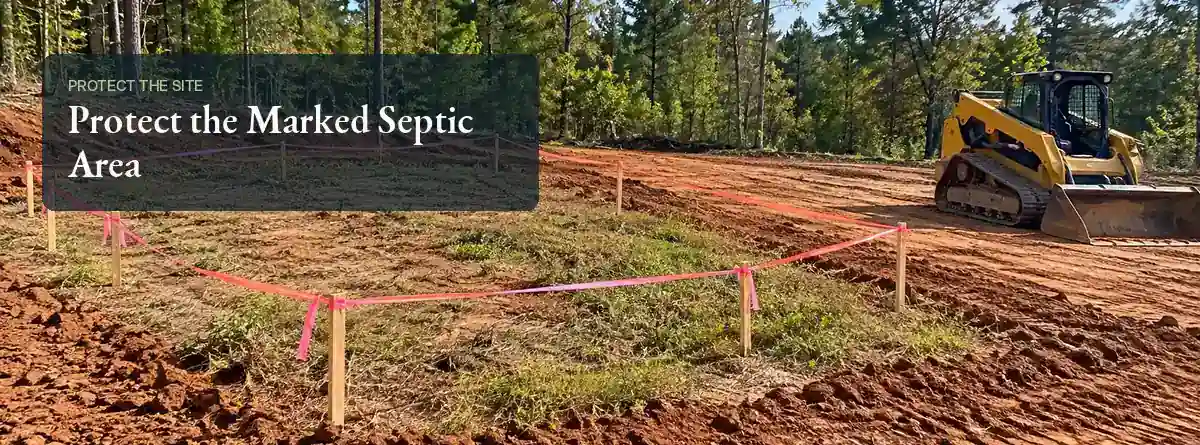
Compaction Is Not Always Obvious From the Surface
A piece of heavy equipment does not have to leave a deep rut to affect the ground beneath it. Repeated passes concentrate weight over the same soil and can compact the area. EPA septic guidance advises against driving or operating heavy equipment over drainfields because soil compaction can interfere with the area and may damage installed components.
For a future system area, avoiding unnecessary traffic is a practical way to preserve the conditions that were evaluated before installation. Dump trucks, compact track loaders, delivery vehicles, material pallets, excavated soil, and other construction activity should have designated locations outside the marked area whenever the site allows it.
Keep Cut, Fill, and Stockpiles Outside the Marked Area
A protected septic area should not become the easiest place to temporarily pile dirt. Removing soil, adding fill, reshaping the surface, or repeatedly crossing the same ground can change the conditions that existed when the property was evaluated.
SCDES specifically asks applicants to identify areas of grading, soil disturbance, drainage changes, and topographical changes, and its application warns that site alterations can negatively affect a wastewater system or its permit status. If work appears to require changing the approved septic area itself, that change should be coordinated with the appropriate septic professional or SCDES before the grading plan is altered.
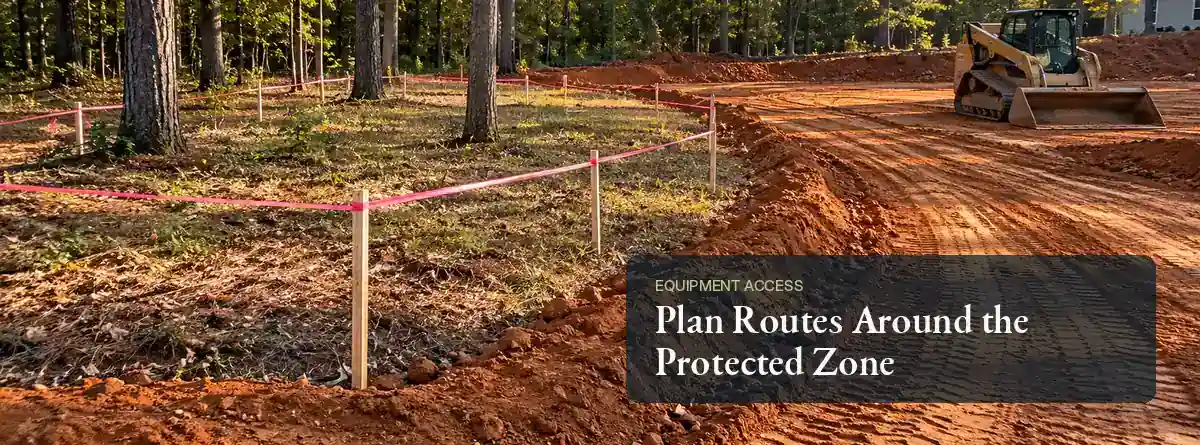
Plan Equipment Routes Around the Protected Zone
Access is often where conflicts begin. The shortest path from the road to the building pad may cross the same portion of the lot reserved for septic use. On wooded or narrow properties, operators may also have limited room to turn around, move material, or reach another part of the site.
That is why equipment movement should be considered as part of the overall site preparation and land services plan. One clearly defined travel route can be easier to control than allowing each truck or machine to find its own way across the property.
Do Not Forget the Repair Area
The primary drainfield is not the only ground that matters. South Carolina septic requirements also provide for a repair or replacement area that may be needed if the original system eventually requires replacement. That reserved ground should be identified and protected along with the initial system area.
It can be easy for a repair area to disappear into the rest of a construction site because nothing is being installed there immediately. Marking it before earthmoving begins helps keep temporary parking, material storage, grading changes, or later improvements from unintentionally taking over that space.
Grading Can Continue Around the Septic Area
Protecting septic ground does not mean the rest of the homesite cannot be shaped. Building-pad work, driveway approaches, access routes, surrounding slopes, and other grading can still move forward where appropriate. The difference is that the protected area becomes a fixed consideration in the site plan instead of another section of ground to reshape.
On Lexington and Midlands properties, this can be especially important where wooded acreage, red clay, slopes, utility routes, and limited construction access all have to fit on the same lot. The equipment operator needs to know both where work is required and where work should stop.
A Simple Jobsite Rule: Mark It, Route Around It, Leave It Alone
Before grading begins, make the protected septic areas visible enough that every operator arriving at the property can recognize them. Establish the travel route, identify staging areas, and keep excess dirt outside the marked boundaries. If the construction plan changes, review the change before moving equipment through an area that was originally meant to remain protected.
AKA Land Services can evaluate the grading, access, and surrounding site work for a property while working around identified septic areas. If you are preparing a Lexington-area homesite and need to coordinate soil movement, access, and protected areas, request a quote to discuss the grading portion of the project. Septic system design, approval, permitting, and installation should remain coordinated with SCDES and the appropriate onsite wastewater professionals.
Frequently Asked Questions
Why should the septic area be marked before homesite grading begins?
Marking the proposed drainfield and repair area gives equipment operators a visible boundary to work around and helps prevent those areas from becoming travel routes, stockpile areas, or grading zones.
Can heavy equipment drive across a future septic drainfield?
Unnecessary heavy-equipment traffic should generally be kept outside the identified septic area. Heavy equipment can compact soil, and any required work within an approved area should be coordinated with the appropriate septic professional or SCDES.
Can excavated soil be stockpiled over a future septic area?
It is better to establish a separate stockpile location. Adding fill or otherwise changing an evaluated septic area may affect site conditions and should not be done casually.
Does the septic repair area need to be protected too?
Yes. The reserved repair or replacement area is part of the septic site plan and should be protected from unnecessary grading, traffic, structures, and material storage.
Does AKA Land Services install septic systems?
This article addresses grading, access, and site preparation around identified septic areas. Septic design, approval, permitting, and installation should be handled through SCDES and qualified onsite wastewater professionals.