
Frequently Asked Questions
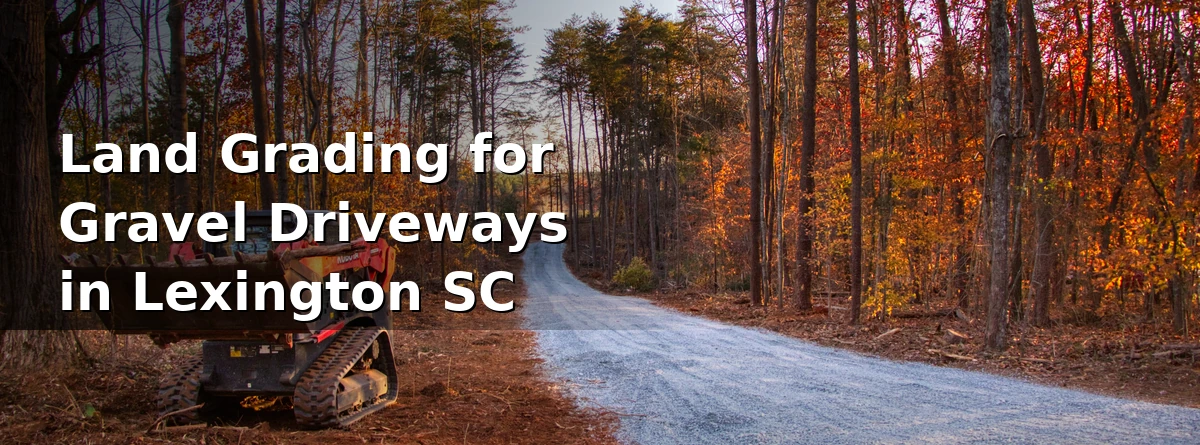
Land Grading for Gravel Driveways in Lexington SC
Proper land grading for gravel driveways in Lexington, SC gives you the right slope, drainage, and a solid base. This helps keep gravel in place and prevents issues like standing water, ruts, washouts, and soft spots. Before adding gravel, shape the driveway so water flows away from the surface instead of pooling underneath.
Why Proper Grading Matters for a Gravel Driveway
Gravel works best when it sits on a firm, well-shaped surface. If the ground underneath is flat in the wrong spots, too soft, or sloped toward a low area, rain can move the gravel or soak the soil below.
Signs Your Driveway Base Needs More Than Fresh Gravel
Adding more gravel might make your driveway look better for a while, but if problems keep coming back, the issue is usually with the ground underneath. Watch for issues that return after rain or regular use.
How Grading Helps Gravel Driveways Last Longer
Grading lets you shape the driveway before adding more material. You can cut down high spots, fix low areas, and prepare the surface so water flows where you want it to go.
Lexington SC Soil and Drainage Considerations
All properties are unique, so grading should consider the yard, road height, nearby buildings, ditches, slopes, and how water drains. In Central South Carolina, compacted soil and red clay hold water differently than gravel, so how the driveway meets the natural ground is important.
When to Grade Before Adding More Gravel
Consider resurfacing if your driveway keeps having drainage issues, deep ruts, uneven spots, washed-out areas, or a weak base. Grading is also a key first step for new gravel driveways, since you can plan the route and drainage before adding material.