
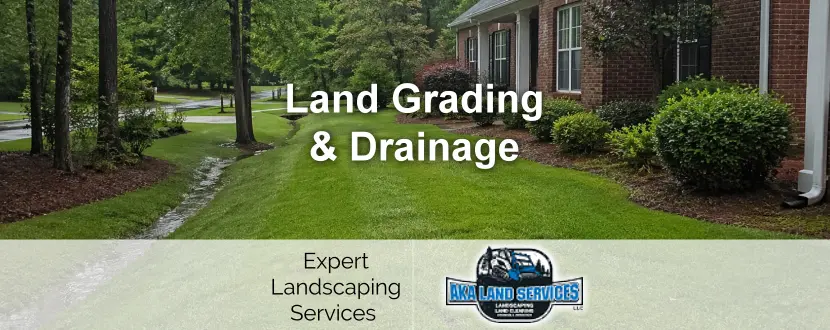
If you have ever walked across your yard after a South Carolina rainstorm and found soggy patches, muddy runoff, or water pooling near the house, you already know drainage problems can turn into a headache fast. In Lexington, SC, where sudden downpours are pretty common and clay-heavy soil can make water slow to soak in, proper land grading and site preparation in Lexington SC is one of the smartest ways to protect your property. It is not the flashiest part of a landscaping or site prep project, but it is absolutely one of the most important. Good grading helps move water where it should go instead of letting it sit around your foundation, destroy your lawn, or carve little gullies through your yard. Honestly, a lot of drainage issues people blame on “bad luck” are really grading problems in disguise.
What land grading actually does
At its core, land grading is the process of shaping the slope and contour of the ground so water drains properly. That sounds simple enough, but in practice it makes a huge difference. When a yard is too flat, water tends to linger. When the slope runs toward the house instead of away from it, the problem gets worse in a hurry. Proper grading creates a controlled path for rainwater, guiding it away from structures, driveways, patios, and other areas that really do not need extra moisture. It is one of those behind-the-scenes improvements that homeowners often do not think much about until they see the damage poor drainage can cause. Then, suddenly, grading becomes very interesting.
Why drainage problems are so common in Lexington, SC
Lexington homeowners deal with a mix of weather and soil conditions that can make drainage especially tricky. Heavy rain can fall quickly here, and when it hits compacted or clay-rich soil, the water does not always absorb the way you would hope. Instead, it runs across the surface, settles in low spots, or collects near the house. Add in uneven terrain, older landscaping, or a driveway that redirects water the wrong way, and you have the perfect setup for recurring yard drainage issues. This is why drainage solutions in Lexington SC are so valuable. They work with the property’s natural layout instead of fighting it, helping direct stormwater before it has a chance to become a recurring mess.
- Water pooling near the foundation often means the ground is sloped the wrong way around the home.
- Muddy spots that never seem to dry out may point to low areas that need regrading or fill dirt.
- Erosion along fences, flower beds, or downspout discharge areas is usually a sign water is moving too fast and without a proper path.
How poor grading affects your foundation and structure
One of the biggest reasons to take grading seriously is foundation protection. Water that collects around the base of a home can seep into crawl spaces, basements, or slab edges and create long-term structural issues. Even if you do not see major damage right away, repeated moisture around the foundation can lead to cracking, settling, mildew, and indoor humidity problems. That is a lot of trouble from something that starts outside in the yard. A properly graded lot slopes away from the house so water is not given the opportunity to linger near the structure. It is one of the simplest and most effective ways to reduce risk. Not glamorous, sure, but incredibly practical.
Standing water is more than just an ugly yard problem
Many homeowners focus on the cosmetic side of drainage trouble first, and that is understandable. Puddles, bare patches, washed-out mulch, and muddy footprints are annoying. But standing water can also lead to deeper issues. Saturated areas can suffocate grass roots, damage plant beds, and attract mosquitoes, which nobody in Lexington is exactly eager to invite over. Wet ground can also become slippery and unsafe, especially on sloped sections of the yard or around walkways. If your property seems to stay damp days after a rain, there is a good chance the grading is not doing its job. Solving that issue often improves both the appearance and the function of the whole landscape.
Grading helps control erosion before it gets expensive
Erosion tends to sneak up on people. At first it might just look like a little washed-out area near the downspout or a thin strip of exposed roots near the edge of the lawn. Then after a few more storms, the damage becomes more obvious. Soil starts moving where it should not, mulch washes into the driveway, and sections of the yard become uneven or unstable. Proper land grading helps prevent this by slowing, redirecting, and organizing the flow of water. Instead of letting runoff create its own chaotic route, grading supports a planned drainage pattern. In many cases, this can be paired with swales, catch basins, or drainage pipes for even better control. But grading is often the starting point because without the right slope, other drainage features have to work a lot harder.
Signs your property may need grading work
Not every drainage issue looks dramatic. In fact, some of the most common warning signs are easy to overlook until they become routine. If you notice puddles forming in the same spots after every rain, water running back toward the house, soil washing away from beds, or a lawn that seems patchy and unhealthy in just a few low areas, those are clues worth paying attention to. Another red flag is when downspouts release water that simply sits there instead of moving away. A yard should not feel like it has its own little weather system after every storm. If it does, professional land clearing and grading services may be part of the solution.
Grading works best when it is tailored to the site
Here is where experience really matters. Good grading is not just about moving dirt around until things “look” level. In many cases, perfectly level is actually the wrong goal. A property needs intentional slope, and that slope has to be designed around the house, existing structures, natural low points, and where water can safely discharge. In Lexington, one yard may need subtle reshaping around the foundation, while another might need more extensive grading to correct a backyard bowl effect or improve runoff near a driveway. The right approach depends on the land itself. That is why a site-specific grading plan usually works much better than a quick patch job.
Practical tips for homeowners dealing with drainage issues
If you suspect grading is contributing to your drainage problems, it helps to observe what happens during and after a storm. Watch where the water starts, where it travels, and where it settles. That gives you a much clearer picture than looking at a dry yard and guessing. It is also wise to check whether gutters and downspouts are making the issue worse by dumping water too close to the home. Sometimes homeowners assume they need a major drainage installation when part of the fix is improving the grade and redirecting roof runoff more effectively. On the other hand, if you keep adding topsoil to a soggy area every year and the problem still comes back, that is usually a sign that the root issue has not been addressed. A little extra dirt is not the same thing as proper grading.
When grading should be combined with other drainage solutions
There are cases where grading alone does a lot of the heavy lifting, and others where it needs support from additional drainage features. For example, a property with severe runoff may benefit from a swale that guides water across the yard without eroding the surface. In other situations, a French drain, catch basin, or extended downspout system may be the best companion to regrading. The important thing is that grading creates the foundation for those systems to work correctly. If the ground is sending water in the wrong direction, the rest of the setup is already at a disadvantage. Think of landscape design and drainage planning as the framework that gives drainage solutions a fighting chance.
Why professional grading is usually worth it
Some outdoor projects are great weekend tasks. Land grading usually is not one of them, at least not when real drainage problems are involved. The slope must be precise enough to move water effectively without causing new problems, and equipment is often needed to do the job safely and efficiently. Too much slope can cause erosion, while too little may not solve anything at all. Professional grading also takes into account nearby hardscape, property lines, utility considerations, and how the finished grade will hold up over time. When done right, it can prevent a long list of future repairs, which is why it tends to pay for itself in avoided damage and frustration.
A smart long-term investment for Lexington property owners
For homeowners in Lexington, SC, land grading is one of the most practical ways to prevent drainage issues before they become bigger and more expensive problems. It protects foundations, helps preserve lawns and landscaping, reduces standing water, and limits erosion across the property. Just as importantly, it gives rainwater a path to follow, which is really what good drainage is all about. If your yard constantly holds water, feels uneven, or seems to get worse with every heavy rain, it may be time to look at the grade of the land itself. Fixing the slope often changes everything. And if we are being honest, there is something pretty satisfying about seeing a hard rain come through and realizing the water is finally going exactly where it is supposed to go.