
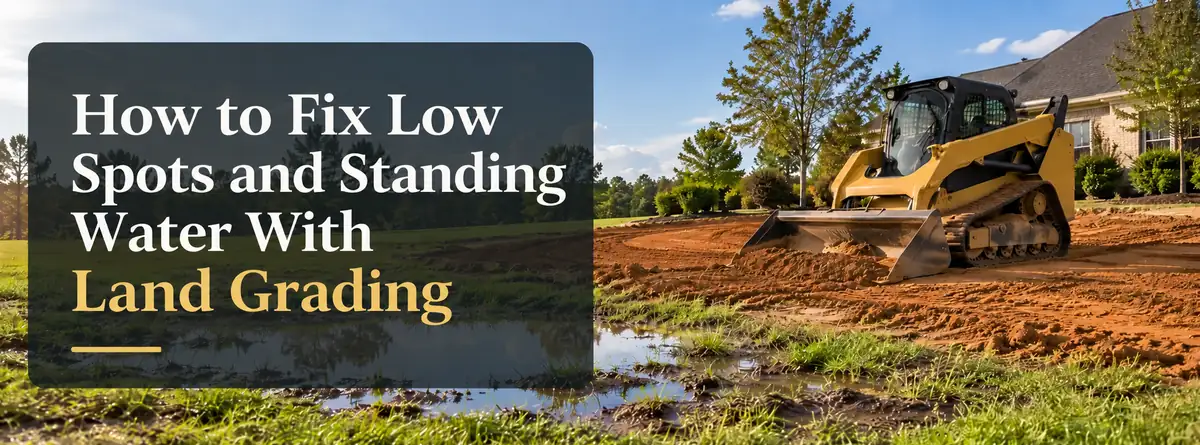
A Low Spot Is a Water-Flow Problem Before It Is a Yard-Shape Problem
When the same part of a yard stays wet after the rest of the property begins to dry, the visible puddle is only part of the problem. The more important question is why water keeps arriving at that spot and why it has no practical way to leave.
A depression may have developed from settling, previous landscaping, construction traffic, erosion, or grading that left one section slightly lower than the surrounding ground. Correcting it usually involves more than making the surface look level. The surrounding elevations have to work together so water continues moving instead of finding another place to collect.
Watch What the Yard Does After a Hard Rain
One of the best times to understand a low area is shortly after rain. Look beyond the puddle itself. Notice which direction water approaches from, whether runoff crosses a driveway or landscaped area, where the ground begins to rise again, and whether there is an obvious lower area that could serve as an outlet.
This helps separate an isolated low spot from a larger grading problem. If several parts of the property feed the same depression, simply filling the center may not address the way water reaches it.
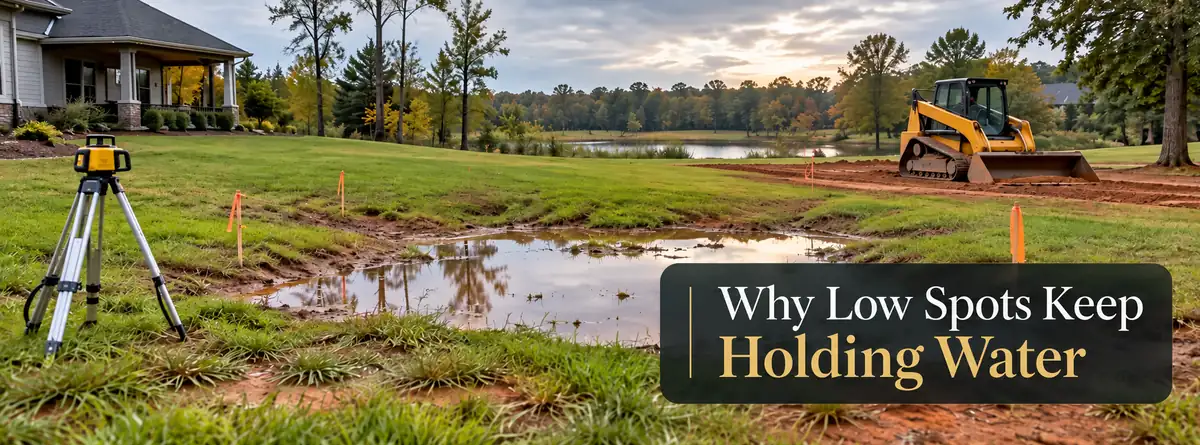
Why Low Spots Keep Holding Water
Adding dirt directly into a wet depression can sometimes improve a small settled area, but it does not automatically correct the surrounding grade. If the yard still slopes toward that location from several directions, rainwater may collect along the edge of the new fill or simply move to the next-lowest section.
Effective land grading in Lexington SC looks at the low area as part of the entire surface. High spots may need to be cut down, soil may need to be redistributed, and transitions between elevations may need to be reshaped so the finished grade works as one continuous surface.
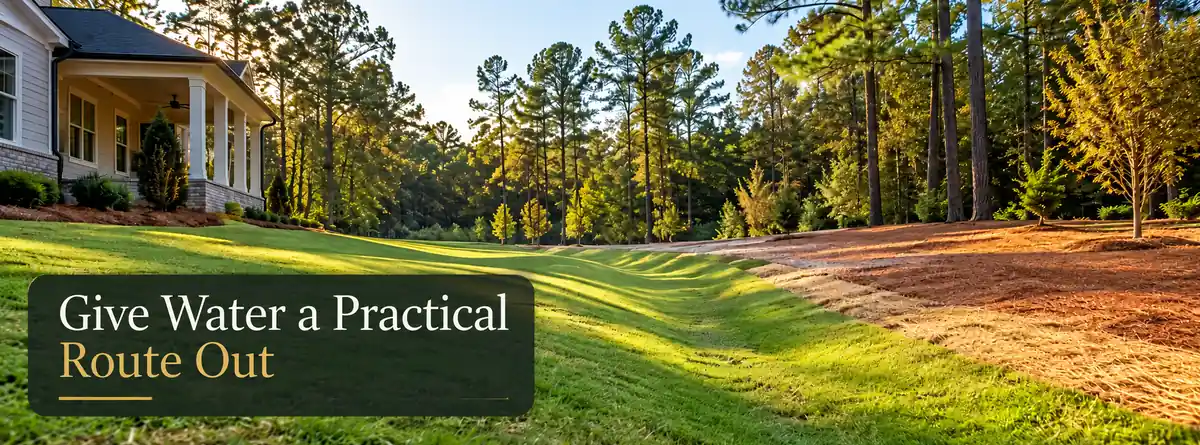
Give Water a Practical Route Out
The objective is not necessarily to make the yard perfectly flat. A completely flat surface can still hold water. Instead, grading should create enough continuous change in elevation for runoff to move away from the problem area toward an appropriate destination.
That destination depends on the property. Existing drainage areas, swales, driveway edges, landscape features, structures, neighboring property, utilities, and erosion concerns can all affect where water should go. The grade should solve the low spot without creating a new problem somewhere else.
When Grading Alone May Not Be Enough
Some standing-water problems are primarily surface-grading issues. Others involve water entering the area faster than the surface can move it away. Roof runoff, concentrated flow from uphill areas, repeatedly saturated soil, or a limited outlet can make a broader drainage approach necessary.
In those situations, grading can still be part of the solution, but it may need to work with a swale, runoff redirection, or another yard drainage solution. The important step is determining why the water is there before choosing the repair.
Do Not Judge the Repair Only by How the Yard Looks Dry
A freshly graded area can look smooth on a sunny day and still have a drainage problem. The real test is how the new elevations manage water. The transitions should remain smooth, runoff should have a clear route, and the corrected area should not form another bowl as the soil settles.
That is especially important around homes, driveways, patios, landscaping, fences, and other improvements where even a small change in elevation can redirect runoff.
Planning a Low-Spot Grading Project in Lexington
Before moving soil, identify the problem area, the direction water arrives from, a practical outlet, nearby structures, utilities, access for equipment, and anything on the property that needs to remain undisturbed. Looking at those pieces together usually provides a much clearer plan than treating the puddle as an isolated patch.
AKA Land Services can evaluate uneven grades, recurring low areas, and standing-water problems in Lexington and surrounding Midlands properties. If you want to determine whether reshaping the grade or combining grading with drainage work makes sense for your property, request a quote from AKA Land Services.
Frequently Asked Questions
Can I just add dirt to a low spot that holds water?
Sometimes a minor settled area can be corrected with additional soil, but fill alone may not solve the problem if the surrounding grade continues directing runoff toward that location.
Does standing water always require a French drain?
No. Some problems are caused mainly by surface elevations and may be improved through grading. Other properties may need grading combined with additional drainage measures.
How do you determine where a yard should be graded?
Start by observing where water comes from, where it collects, the surrounding elevations, nearby structures, and whether there is a practical lower outlet for runoff.
Can grading move the standing-water problem somewhere else?
Poorly planned grading can redirect runoff into another low area. The finished grade should be planned around the larger drainage path instead of correcting only the visible puddle.
Can AKA Land Services evaluate low spots in Lexington SC?
AKA Land Services provides land grading and drainage services and can evaluate the slope, runoff pattern, access, and surrounding property conditions before recommending the appropriate work.