
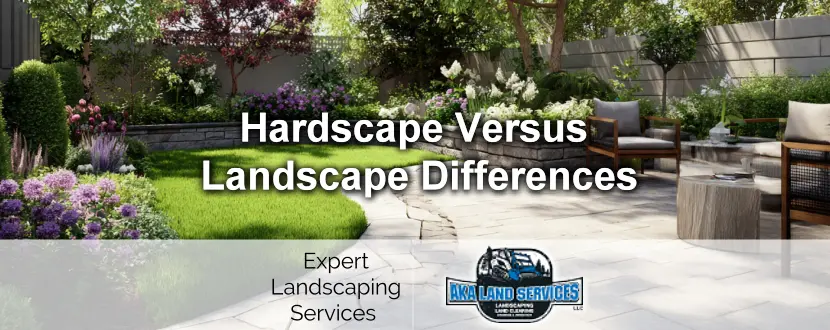
If you've ever planned a yard renovation, you've probably heard the terms hardscape and landscape. At first glance, they sound similar, and many homeowners use them interchangeably. In reality, they refer to two completely different parts of outdoor design. Understanding the difference can make planning your property improvements much easier—and it can also help you communicate better with contractors or landscape professionals.
In simple terms, landscaping refers to the living, growing elements of your yard, while hardscaping covers the solid, non-living structures. The two work together to form the finished outdoor environment, with landscaping providing natural elements and hardscaping supplying structure.
What Is Landscaping?
Landscaping covers grass, trees, shrubs, flowers, and garden beds. It also includes preparing soil, installing irrigation, and arranging plants. It adds color, texture, and seasonal interest to your yard.
Flowers bloom in spring, grass fills in for summer, and leaves turn color in fall. These changes are landscaping. Homeowners use landscaping to boost curb appeal, provide shade, or create relaxing spaces.
Landscaping ranges from simple lawn care to elaborate gardens. Some prefer decorative flowers, others choose native or drought-tolerant plants for less maintenance.
What Is Hardscaping?
Hardscaping refers to non-living structures such as stone, concrete, brick, wood, or metal. These are the elements that provide the yard’s structure and use.
Without hardscaping, outdoor spaces feel undefined. Walkways guide, patios gather, and retaining walls manage slopes. These parts shape how the yard is used.
- Patios made from pavers, brick, or concrete
- Walkways connecting areas of the yard
- Retaining walls that control slopes and erosion
- Driveways, fire pits, and outdoor kitchens
Many homeowners are surprised by how much hardscaping can improve the usability of their yard. Adding a patio or walkway can turn an unused exterior area into a comfortable gathering spot for grilling or nighttime relaxation.
How Hardscape and Landscape Work Together
Yards that combine both hardscape and landscape elements in design are the most attractive. Hardscaping gives structure and framework; landscaping softens the space and adds beauty. Designing the two together results in a well-integrated outdoor environment.
For example, a stone patio can be surrounded by plants, a walkway lined with shrubs, and retaining walls used as seating. These combinations add interest and function.
Combining both elements boosts durability. Hardscaping lasts and needs little care. Landscaping adds variety. Hardscape features can protect landscaping by controlling erosion and drainage.
Common Hardscape Features in Residential Yards
Modern yards often include patios, fire pits, and pathways in addition to a lawn. These outdoor features expand use beyond basic greenery.
Popular hardscaping includes patios, pergolas, retaining walls, kitchens, and stone paths. These add beauty and use; a patio can be an outdoor room while a wall tames a slope.
Hardscape materials also come in a wide range of styles. Natural stone provides a rustic appearance, while concrete pavers offer clean lines and modern style. Brick can create a classic, timeless look that suits traditional homes.
Common Landscaping Elements
Hardscaping forms your yard’s structure. Landscaping adds life with plants, color, fragrance, and wildlife. Landscaping personalizes your space.
Landscaping can include flower beds, ornamental trees, hedges, veggie gardens, or grasses. Some prefer symmetry; others prefer a natural look.
Good landscape design considers growth. Trees may shade patios; shrubs may grow into privacy screens.
Planning Hardscape and Landscape Projects
One of the most common mistakes homeowners make is planning hardscape and landscape projects separately. Ideally, both should be considered simultaneously. This ensures walkways connect naturally, planting areas are positioned correctly, and outdoor spaces move seamlessly.
For example, installing a patio before planning garden beds leaves awkward spaces. Design everything first so that all features complement each other. Pros often use a master plan for both hardscape and landscape.
Hardscaping changes drainage, so manage grading and runoff carefully. Use retaining walls, pipes, or gravel to protect both structures and plants.
Which Matters More?
Homeowners sometimes ask which is more important: hardscaping or landscaping. The truth is that neither one works well without the other. A yard with only plants may lack usable spaces, while a yard with only hard surfaces can feel sterile and uncomfortable.
Blend both elements naturally. Walkways move visitors through gardens; patios sit under shade trees. Hardscape and landscape combined form balanced, inviting spaces.
Knowing the difference between hardscape and landscape helps create balance. Understanding how they interact makes outdoor design much easier.