
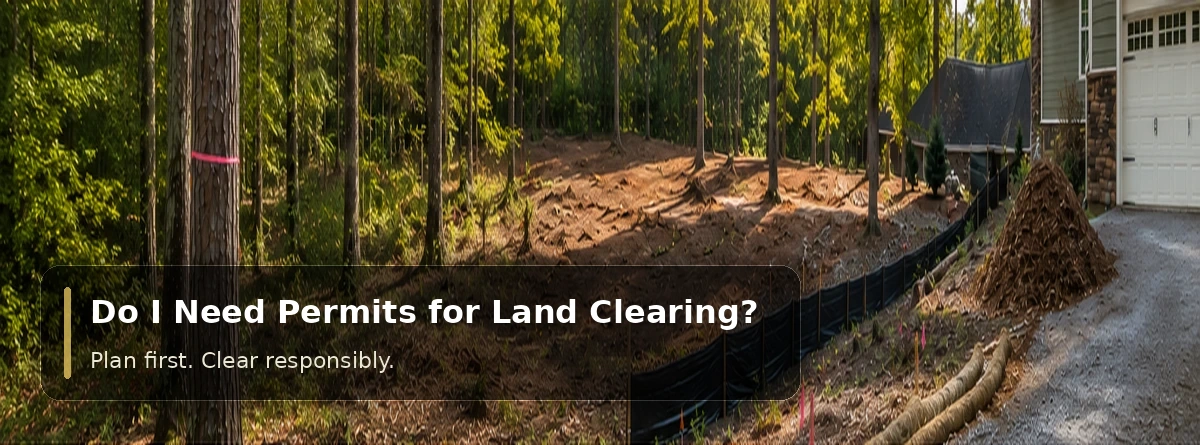
Do I Need Permits for Land Clearing?
Quick Answer: You may need permits for land clearing if the work disturbs soil, changes drainage, removes protected trees, involves grading, or is part of a larger construction project. In Columbia, Lexington, Richland County, and nearby areas, the safest first step is to check local land disturbance, stormwater, tree, and zoning rules before equipment starts moving.
Clearing a small patch of brush is very different from clearing land for a driveway, home addition, building pad, drainage change, or new landscape installation. The permit question usually depends on how much land is disturbed, where the property is located, whether trees are protected, and whether stormwater runoff could affect nearby lots, roads, ditches, creeks, or drainage systems.
Before removing trees or scraping soil, it helps to think beyond the clearing itself. A good plan should account for erosion, slope, future access, water movement, equipment needs, and how the property will function after the work is complete. AKA Land Services can help homeowners and property owners with land clearing services in Lexington, SC that prepare the site properly instead of leaving behind a bare, hard-to-manage property.
What Usually Triggers a Permit Review?
Permit requirements often come into play when land clearing becomes land disturbance. That can include grading, excavating, filling low areas, cutting access paths, removing stumps, changing slopes, or preparing a site for construction. Even if the work looks simple, moving soil can quickly create runoff problems during heavy South Carolina rain.
Larger projects are more likely to need formal review, especially when one acre or more may be disturbed or when the work is part of a larger development plan. Smaller projects can still require local forms, reviews, or approvals depending on the property, municipality, subdivision, drainage conditions, and whether the work affects trees or public right-of-way areas.
Tree Removal Is Not Always the Same as Land Clearing
Removing one dead tree from a private residential yard is not the same as clearing a wooded lot. Some local rules focus on protected trees, grand trees, street trees, buffer areas, or trees connected to development requirements. Within city limits or in certain planned areas, tree work may require review before removal, especially when clearing is tied to construction, grading, paving, trenching, or other site work.
If you are unsure whether a tree is protected, do not assume. Check with the proper local office first. It is usually easier to ask before cutting than to deal with stop-work orders, replacement requirements, erosion damage, or neighbor complaints afterward.
Drainage and Erosion Matter More Than Most Homeowners Expect
Land clearing exposes soil. Once roots, leaf litter, and groundcover are removed, rain can move across the yard faster and carry sediment into ditches, storm drains, creeks, and neighboring properties. That is one reason stormwater and erosion-control rules matter so much on clearing and grading projects.
Good planning may include silt fencing, straw wattles, mulch, temporary stabilization, careful grading, drainage planning, and long-term groundcover. For properties with slopes, compacted soil, standing water, or drainage concerns, drainage solutions in Lexington, SC can help the finished property handle rainfall more responsibly.
Why This Matters
Land clearing can change the way a property behaves. A shaded, wooded area may become hotter, drier, more prone to erosion, or more difficult to maintain once the trees and understory are removed. In Columbia, Lexington, Irmo, Lake Murray, Elgin, and nearby areas, heat, humidity, clay soils, and heavy rainfall can make poor clearing decisions show up fast.
Common Mistakes
- Clearing first and asking about permits after the work has already started.
- Removing too many trees without thinking about shade, soil stability, drainage, and future property use.
- Leaving bare soil exposed after clearing, especially before a rainy season or storm event.
- Assuming county, city, HOA, and stormwater requirements are all the same.
Best Practices
- Call the local permitting, planning, or stormwater office before clearing, grading, or stump removal begins.
- Mark the area to be cleared and identify trees, slopes, drainage paths, utilities, and nearby property lines.
- Stabilize exposed soil quickly with mulch, seed, erosion-control measures, or planned groundcover.
- Use proper land grading services where slope, runoff, or drainage direction needs to be corrected.
Local Relevance
Rules can differ between Columbia, Lexington County, Richland County, town limits, unincorporated areas, HOA communities, and properties near drainage features. A project near Lake Murray, a roadside ditch, a creek, a steep slope, or a developed subdivision may need more careful review than a small maintenance cleanup. When in doubt, confirm the requirements with the office that has authority over your specific address.
When to Contact a Professional
Contact a professional when clearing affects drainage, slope, tree canopy, soil stability, future access, or the overall layout of the property. You may also want guidance if you are preparing land for a driveway, building pad, fence line, drainage correction, landscape installation, or more usable outdoor space. AKA Land Services offers professional land services in Lexington, SC for clearing, grading, drainage, fencing, irrigation, landscape installation, and outdoor spaces.
Final Thoughts
Land clearing is not just about removing what is there. It is about protecting the property, respecting local rules, managing water, and planning what comes next. If you are preparing to clear part of your property in Columbia, Lexington, or a nearby South Carolina community, contact AKA Land Services for help with practical land clearing, grading, and drainage planning.
Frequently Asked Questions
Do I need a permit to clear land in South Carolina?
You may need a permit if the work disturbs soil, involves grading, changes drainage, removes protected trees, or is part of a larger construction project. Requirements depend on the property location and project scope.
Does clearing less than one acre require a permit?
Not always, but smaller projects can still require local forms, review, HOA approval, tree approval, or stormwater guidance. Check with the local city, county, or stormwater office before starting.
Can I remove trees on my own property without asking anyone?
Sometimes, but not always. Local rules may apply to protected trees, street trees, grand trees, buffer areas, development sites, or work inside a public right-of-way.
Why does drainage matter when clearing land?
Clearing removes roots, groundcover, and leaf litter that help slow water down. Without proper stabilization, rain can move soil, create erosion, clog drainage areas, and affect nearby properties. AKA Land Services can help with drainage solutions that support better runoff control and healthier property planning.
Who should I call before land clearing in Columbia or Lexington?
Start with the local planning, permitting, stormwater, or zoning office for your property address. Then speak with a land services professional if you need help planning what should happen before, during, or after the clearing work. For local help with land clearing in Lexington, SC, you can also contact AKA Land Services.
